Commercial Equipment Recoveries From Highway Incidents
Heavy Duty Towing in Clayton for tractor-trailers, buses, and construction equipment after roll-overs or jackknife situations
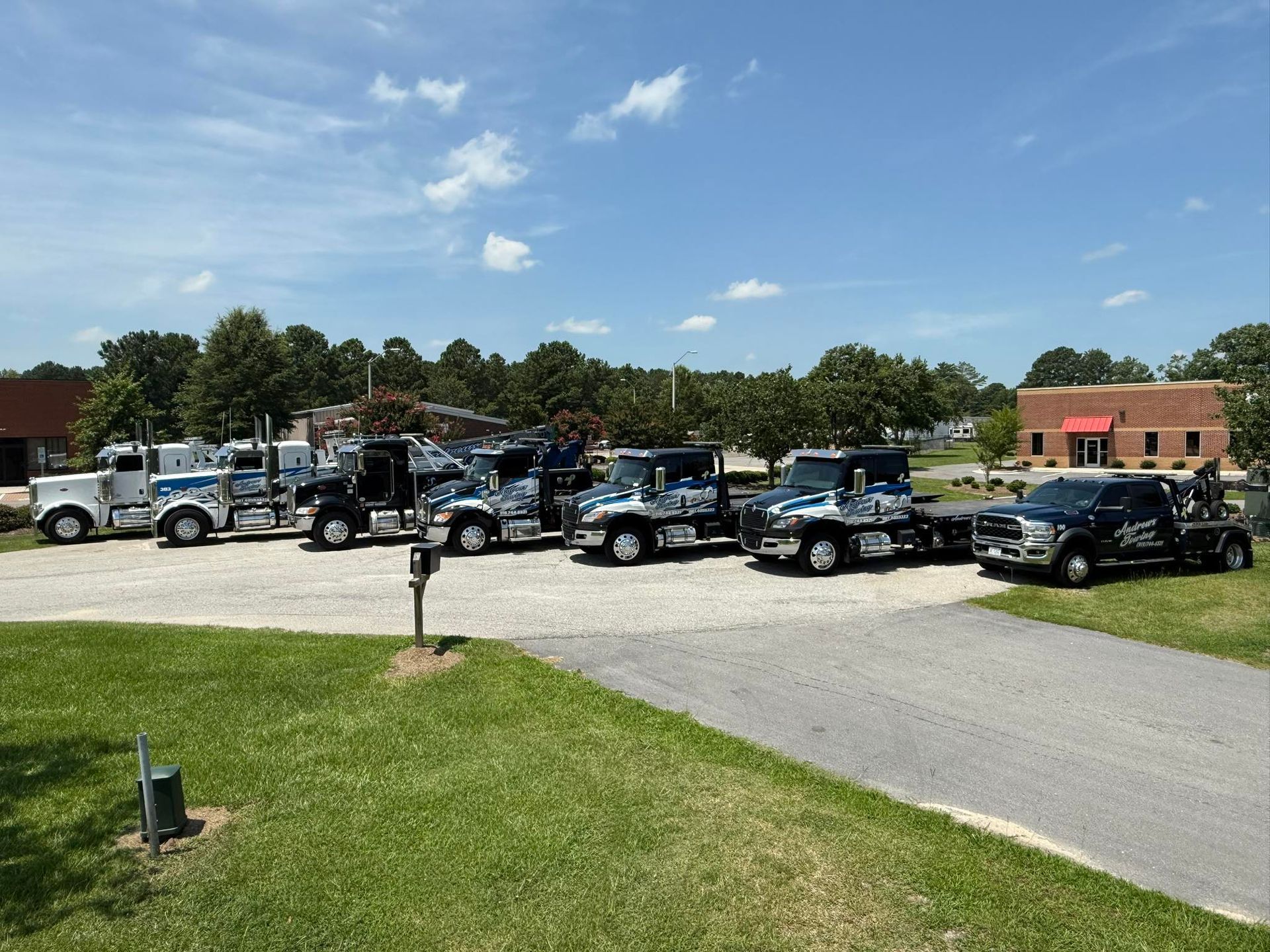
A tractor-trailer jackknifed across two highway lanes or a fully loaded dump truck stuck axle-deep in roadside mud creates hazards that standard tow equipment cannot address. Andrews Towing handles heavy-duty towing in Clayton using reinforced chassis wrecker units built to pull severe loads ranging from 26,000 to over 80,000 pounds. The equipment addresses major highway roll-overs, commercial machinery transport, and ditch extractions where hydraulic 360-degree rotating booms and multi-winch systems provide the pulling power necessary for tractor-trailers, city or charter buses, Class A motorhomes, dump trucks, and heavy construction equipment like excavators or tractors.
Heavy-duty towing uses specialized hardware including heavy-duty under-lifts and multiple winch attachment points to stabilize overturned vehicles or reposition equipment that has left the roadway. The process accounts for load distribution, trailer integrity, and the angle of recovery needed to prevent additional structural damage during extraction.
Arrange on-site assessment to evaluate the recovery approach for your specific commercial vehicle or construction equipment situation.
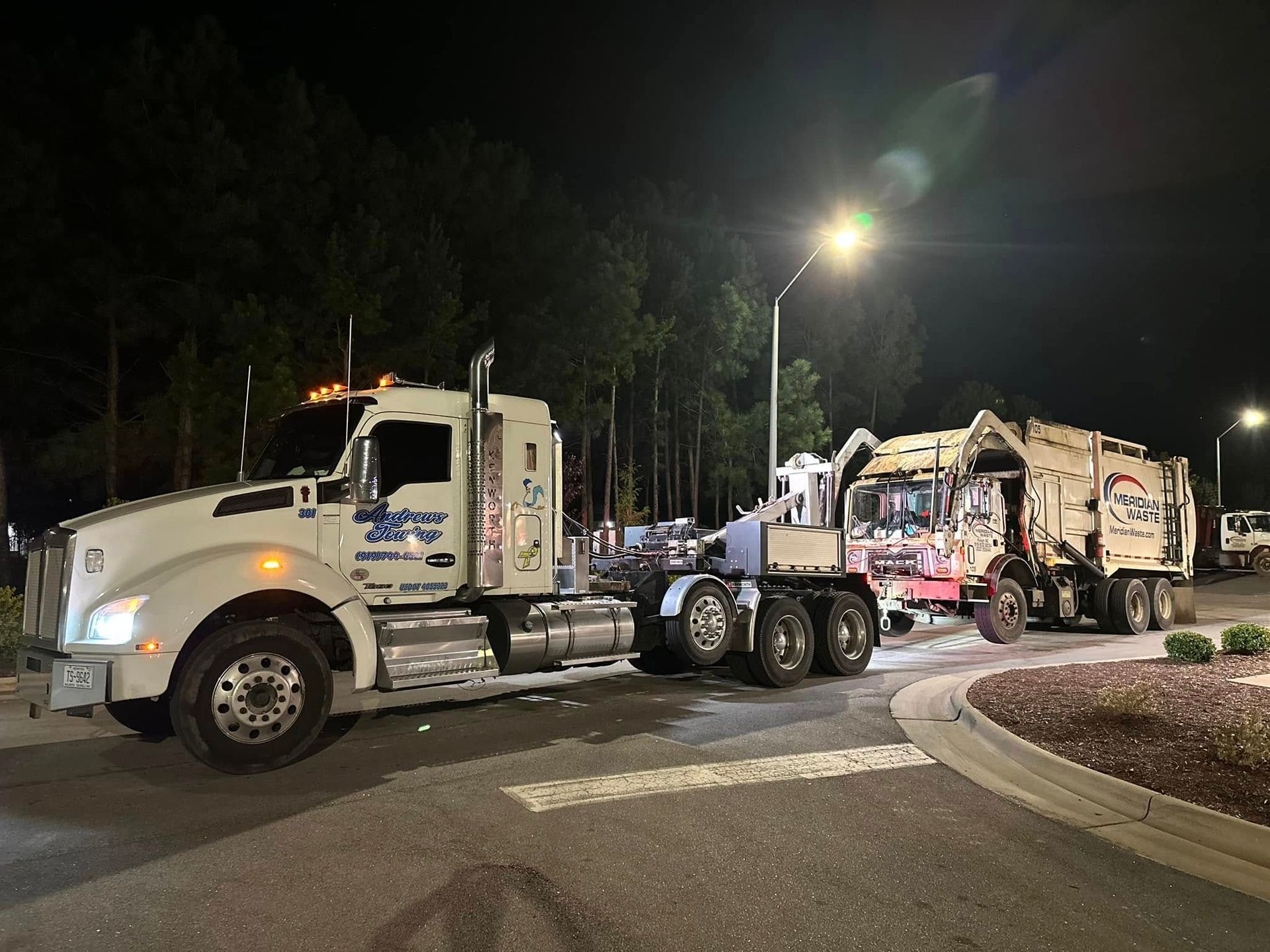
What Proper Heavy-Duty Recovery Requires
Recovering a commercial vehicle after a highway incident requires calculating the vehicle's center of gravity, identifying secure anchor points on the frame, and positioning the wrecker to apply force without destabilizing the load or causing the recovery vehicle to lose traction. Heavy hydraulic booms rotate a full 360 degrees to approach vehicles from angles that account for guardrails, embankments, or median barriers that restrict equipment positioning.
Once the recovery is complete, the roadway clears for traffic resumption and the commercial vehicle or equipment relocates to a repair facility, impound lot, or destination specified by the fleet operator or owner. Heavy-duty towing resolves the mechanical inability to move under power and removes wreckage from travel lanes, medians, or shoulders where the vehicle poses a traffic hazard or regulatory violation.
The service addresses recovery and transport exclusively—it does not include cargo transfers, fluid cleanup, debris removal beyond securing loose vehicle components, or mechanical repairs to restore the vehicle to operational status. Some recoveries require permits for oversized load transport or coordination with state highway authorities when heavy equipment must travel specific routes with weight or clearance restrictions.
Answers to Frequent Service Questions
Heavy-duty towing involves specialized equipment and planning that differs significantly from standard passenger vehicle recovery, particularly when dealing with commercial transportation incidents or construction equipment relocations around Clayton.
What weight range does heavy-duty towing equipment handle?
Heavy-duty wrecker units recover commercial vehicles and machinery weighing between 26,000 and 80,000 pounds, covering tractor-trailers, city buses, charter coaches, large motorhomes, dump trucks, and construction equipment like excavators.
How do rotating hydraulic booms improve recovery outcomes?
The 360-degree rotating boom allows the wrecker to pull from multiple angles without repositioning the truck, which matters when guardrails, ditches, or embankments limit where the recovery vehicle can safely park during extraction.
When does a commercial vehicle require heavy-duty towing instead of medium-duty service?
When the vehicle exceeds 26,000 pounds, when it has rolled onto its side or roof, when it is buried in mud or soft shoulder material requiring extreme pulling force, or when long-distance transport of non-operational construction machinery is needed.
How does Clayton's highway access affect heavy-duty recovery response?
Interstate corridors and US highway routes through Clayton see regular commercial traffic, and wrecker units stage to reach incident locations quickly while coordinating with highway patrol to establish safe work zones during recovery operations.
What details help dispatch plan the appropriate recovery approach?
Report the vehicle type and approximate weight, describe its position relative to the roadway, note whether it has rolled or jackknifed, mention if cargo has shifted or spilled, and provide the nearest mile marker or exit number for highway incidents.
Andrews Towing deploys heavy-duty recovery equipment with the multi-winch systems and hydraulic capacity required for commercial vehicle incidents and construction equipment transport throughout Clayton and surrounding highway corridors. Contact dispatch with your vehicle type and location details to coordinate the appropriate recovery response.